What I check before every water change
Aquarium water parameters get reduced to a checklist in most guides. pH, ammonia, nitrite, nitrate, temperature, hardness. Memorize the ranges, buy a test kit, call it a day.
Maybe that works. Then why did my first 20-gallon tank crash two months in with a reading of zero ammonia and zero nitrite? Every strip said “perfect.” The fish still died. That lesson cost me three neons and a lot of pride.
The truth is testing is not about numbers. It is about catching a trend before your fish become the indicator. Here is what I actually do now—and where I think most people go wrong.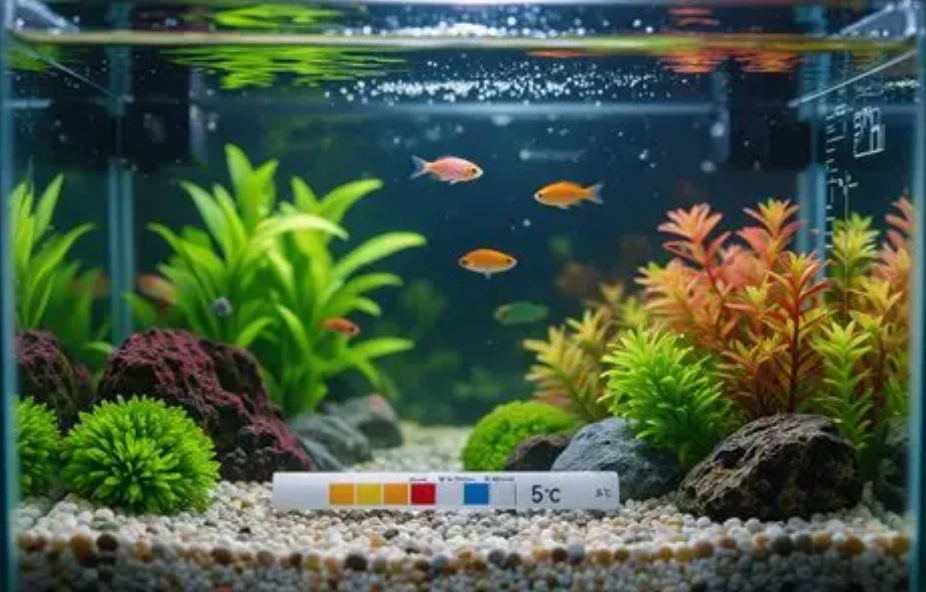
The six numbers that actually matter (and the ones that do not)
I check six things regularly. Others I ignore unless something feels off.
Ammonia (NH3/NH4+) — the silent killer. Any detectable amount above 0.25 ppm is a red flag. My first mistake was trusting a strip that read “safe” when the actual toxicity depends on pH and temperature. More on that later.
Nitrite (NO2-) — should stay at zero. Even 0.5 ppm can stress fish. This is the middle child of the nitrogen cycle—easy to overlook but dangerous.
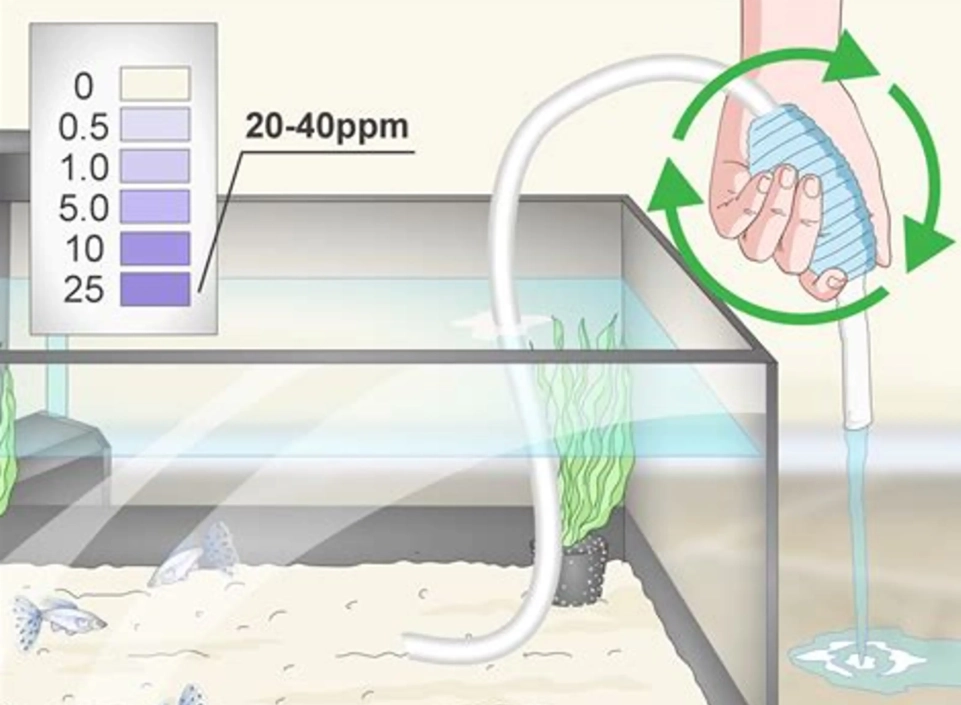
Nitrate (NO3-) — the end product. Under 20 ppm is what I aim for, though I have seen healthy tanks running at 40 ppm. The number matters less than the trend. If it climbs 10 ppm per week, you have a stocking or feeding problem.
pH — fish adapt to a stable pH more easily than a “perfect” one that swings. Keep it consistent. Most community fish are fine between 6.5 and 7.8. I once chased a pH of 7.0 exactly and ended up crashing my kH. Bad move.
Temperature — obvious, but I list it because heaters fail quietly. A 2°F swing overnight is fine. A 5°F swing can trigger ich.
General hardness (GH) and carbonate hardness (KH) — the most ignored pair. KH keeps your pH stable. If your KH is under 3 dKH, your pH will bounce around like a cork in a storm. I learned that after a pH crash wiped out a batch of cherry shrimp.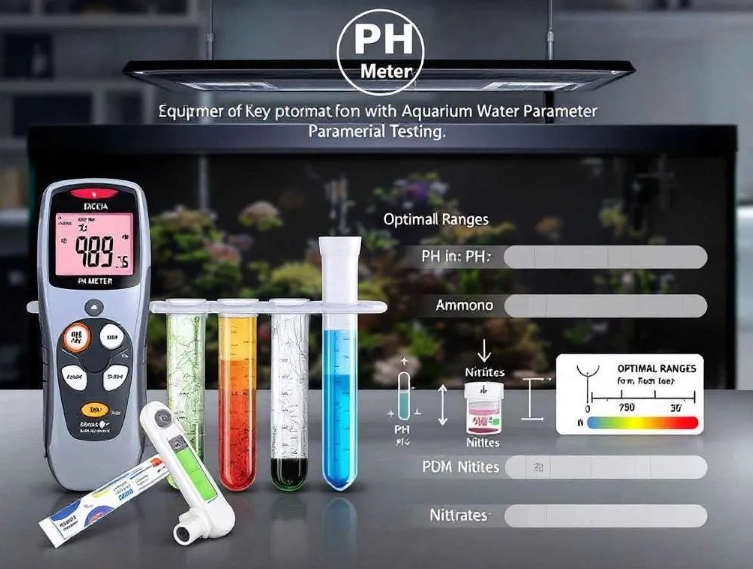
What I do not test daily: phosphate, iron, copper, dissolved oxygen. Unless you keep sensitive corals or breeding discus, these are usually noise. Test them only if you see algae explosions or odd behavior.
How I test aquarium water without fooling myself
Test strips are fast. They are also misleading. I have compared a strip reading against a liquid kit side by side. The strip said nitrate was 20 ppm. The liquid kit said 80 ppm. My fish were swimming in a sewer.
So I switched to liquid test kits—specifically the ones with drops and test tubes. Yes, they take three minutes. Yes, you have to shake the bottle like you mean it. The API Freshwater Master Test Kit is my baseline. Not perfect, but consistent.
Here is the non-negotiable step most people skip: shake the nitrate bottle #2 for a full 30 seconds. Not ten. Not twenty. If you shortchange it, the reading is garbage. I see this in forum posts all the time. Someone posts a nitrate of 5 ppm with a photo of a tank that looks like pea soup. They did not shake the bottle.
Also, test at the same time of day. Nitrate can vary by 5–10 ppm between morning and evening if you dose fertilizers or feed heavily. I test right before my weekly water change, every time.
One more trap: old test kits. Reagents expire. If your ammonia test starts turning green instantly on a tank that is cycled, check the expiration date on the bottle. I lost a whole afternoon once chasing a “ghost ammonia spike” that turned out to be a two-year-old reagent.
Ideal water parameters for freshwater fish: a chart I trust
Here is a quick reference I keep on my phone. These ranges work for most common freshwater community fish.
| Parameter | Target Range | What Happens If Off |
|---|---|---|
| Ammonia | 0 ppm | Gill burns, gasping at surface |
| Nitrite | 0 ppm | Brown blood disease, lethargy |
| Nitrate | Stress, algae blooms, long-term organ damage | |
| pH | 6.5–7.8 (stable) | Swings cause shock, disease outbreaks |
| Temperature | 74–80°F (23–27°C) | Ich, fungal infections, appetite loss |
| GH | 4–12 dGH | Osmoregulation issues, breeding failure |
| KH | 4–8 dKH | pH crashes, especially in planted tanks |
Notice I did not include specific numbers for discus or goldfish. They differ. Use this as a starting point, then adjust based on your species. The chart for a betta is not the chart for a rift lake cichlid.
When the numbers go sideways, fix them in this order
Say you test and find ammonia at 0.5 ppm and nitrate at 60 ppm. Panic mode? No.
First, do a 30–50% water change. That is the fastest way to drop ammonia and nitrate simultaneously. Do not add chemicals to “lock” ammonia until you have removed the water. I see people pour in conditioner and hope for the best. Water changes are free and immediate.
Second, check your filter. Is it clogged? Is the flow reduced? A dirty filter media can harbor decaying matter that spikes ammonia. Rinse it in tank water (never tap) and see if that helps.
Third, cut feeding for two days. Fish can go a week without food. Uneaten food and fish waste are the root of most ammonia spikes.
Fourth, test again after 24 hours. If ammonia is still above 0.25 ppm, do another water change. Repeat until it hits zero.
And do not forget to test your tap water. I once chased a nitrate problem for weeks only to discover my tap water had 20 ppm nitrate straight out of the faucet. That changed everything about how I did water changes.
Real questions I get from frustrated fish keepers
My test strips show perfect parameters but my fish keep dying. What am I missing?
Test strips are unreliable for ammonia and nitrite at low levels. Get a liquid kit. Also, check your KH. A low KH can allow a pH crash overnight that strips miss. I have seen this in tanks with driftwood and soft water. The strips said pH 7.0 in the morning; the next morning it was 6.0 and the fish were at the top gasping.
How often should I test aquarium water parameters in a new tank?
Test ammonia and nitrite daily for the first three weeks. Ignore nitrate until ammonia and nitrite both read zero. Then test nitrate every three days for another two weeks. After that, weekly is fine. I know that sounds excessive, but a fishless cycle can stall without you realizing it. Daily testing catches that early.
Can high nitrate cause fin rot even if it is only 40 ppm?
Fin rot is usually bacterial, but chronic nitrate stress weakens the immune system. 40 ppm is not instantly toxic, but if it is always at 40, your fish are living in a low-grade stressor. I have seen fin rot clear up simply by dropping nitrate below 20 ppm and keeping it there. No medication needed.
I cannot get my pH to stay at 7.0. It keeps dropping to 6.4. Help.
Do not fight it with pH-up chemicals. That is a losing battle. Your KH is likely too low. Add a source of carbonate—crushed coral in a filter bag or a small amount of baking soda (1 teaspoon per 10 gallons, dissolved first). That stabilizes pH naturally. Chasing a specific number with chemicals causes swings that are worse than a slightly low but stable pH.
Water parameters are not a test you pass. They are a conversation with your tank. Watch the numbers, but watch the fish more. A slightly off reading with active, feeding fish is far less worrying than a “perfect” reading with fish hiding in the corner.

Comments