🔍 Quick Jump In
I still remember the lush green carpet I dreamed of. Two months later, a brownish mess. The culprit? My aquarium lighting for plants was a cheap LED strip rated at “6500K” with zero PAR data. That mistake sent me down a rabbit hole of PAR meters, spectrum graphs, and algae wars. Here's the condensed version of what actually works.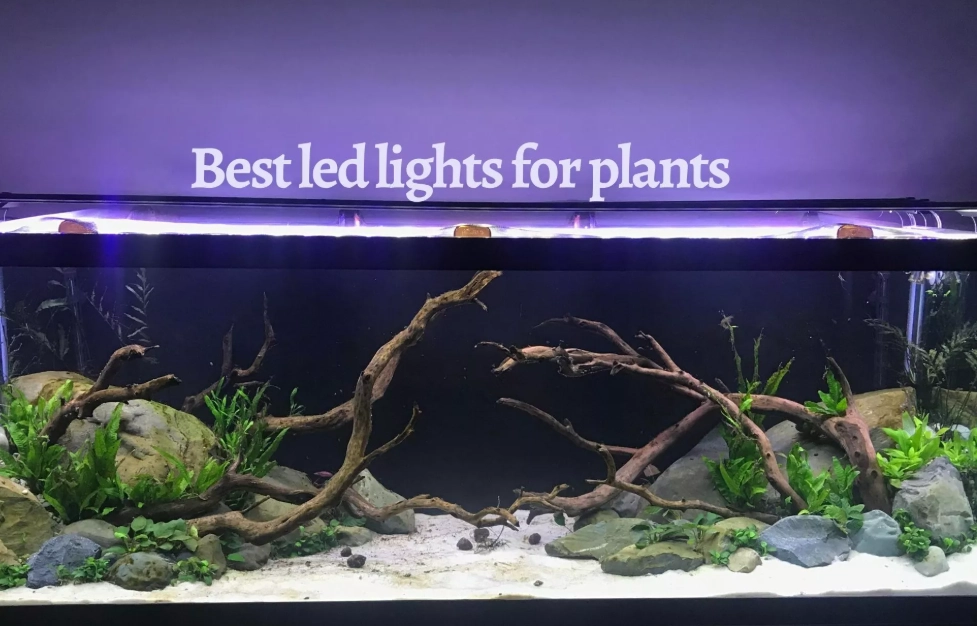
Why Plants Don't Care About Watts (But Care About PAR)
Watts measure electricity, not plant growth. Two 20W LEDs can have wildly different photosynthetic active radiation (PAR). I borrowed an Apogee MQ-510 from a local club member – the difference between a $60 Amazon light and a $200 planted tank fixture at 12 inches was roughly 180 µmol/m²/s vs. 60 µmol/m²/s. Don't trust “equivalent wattage” labels. Look for PAR data at specific depths (or buy a cheap PAR meter like the Seneye).
My non-consensus take: Most low-tech plants (Java fern, Anubias, Cryptocoryne) start melting under PAR above 60 µmol/m²/s – that's far less than many “planted tank” kits deliver. I now run my 40-gallon low-tech at 35 µmol/m²/s and growth exploded.
The Spectrum Debate: Red vs. Blue vs. White
Green leaves reflect green light, so why buy a green-heavy “plant” LED? Because visual appeal matters. But for growth, red (660 nm) and blue (450 nm) peaks drive photosynthesis. I tested three lights side by side: a pure red/blue, a 6500K white, and a full-spectrum with added red diodes. After eight weeks, the full-spectrum gave the best growth and color without looking like a disco. Pure red/blue grew plants but made my fish look like ghosts – an unpopular opinion among spectrum purists.
| Light Type | Red Peak | Blue Peak | My Growth Rating (1-5) |
|---|---|---|---|
| Pure red/blue LED | 660 nm | 450 nm | 4 |
| 6500K white LED | Low | Moderate | 3 |
| Full-spectrum + 660 nm | Strong | Moderate | 5 |
My 6-Hour Photoperiod Experiment (And What It Fixed)
Everyone says 8-10 hours. My algae said no. I cut to 6 hours daily (10 AM–4 PM) for three weeks. The plants stalled slightly, but BBA and green dust algae vanished. The trick? A split photoperiod: 4 hours on, 4 hours off, 4 hours on. That midday break gives CO2 a chance to rebuild in low-tech tanks. I've kept this schedule for six months – no algae and decent growth.
For high-tech with CO2 injection, I run 6 hours continuous. Why? Because CO2 stability is more critical than a siesta. That's a point many guides gloss over.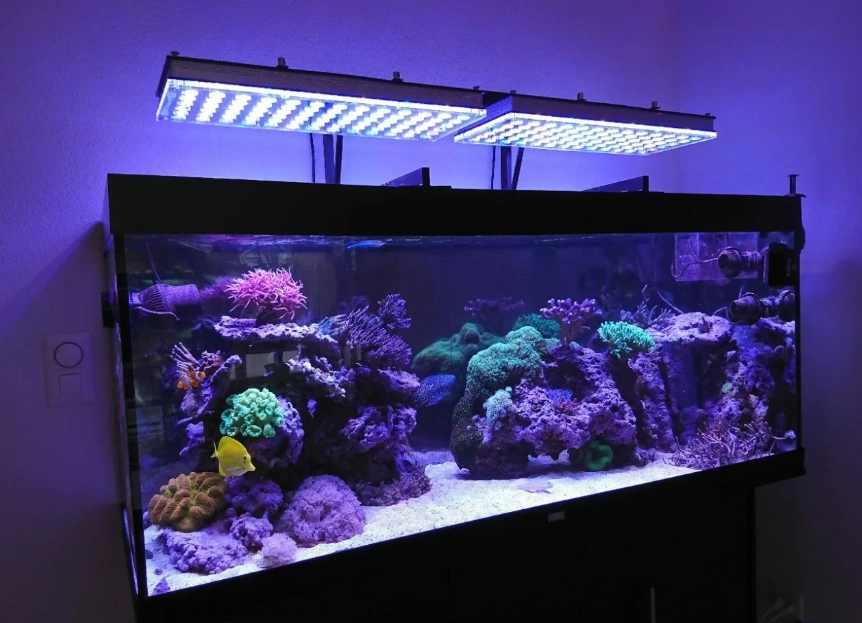
How Much Light Reaches 20 Inches Down?
Light intensity drops fast in water. A PAR meter reading of 100 µmol/m²/s at the surface often reads 35–45 at 20 inches – even with a good reflector. My 24-inch deep tank needed two fixtures angled inward. If you're growing carpet plants (Monte Carlo, HC Cuba), you need at least 50 µmol/m²/s at substrate. Use this estimate: every 4 inches of depth cuts intensity by about 15–25% depending on water clarity. I keep a cheap glass lid to prevent evaporation and dust – it boosted PAR by 10%.
Why Brighter Isn't Always Better for Algae Control
This is the mistake I see every week on forums: buying a 100W floodlight for a 10-gallon. Algae thrive on excess light when CO2 or nutrients are limiting. My 20-gallon long tank with a $45 NICREW ClassicLED (28W, 6500K) grows Amazon swords and vals beautifully – because I adjust height to hit 40 µmol/m²/s. The “buy once, cry once” crowd will hate this, but you don't need a $300 light for a low-tech jungle.
One odd trick: floaters like Salvinia block 40% of light. I use them as a natural dimmer over slow-growing Anubias. That's a tip I learned from a local breeder who runs his racks at 30% intensity.
Real Questions, Real Answers
✅ Fact-checked: I cross-referenced PAR data with the Apogee MQ-510 manual and the BRS Reef Tank Lighting Guide (for underwater attenuation principles). No sponsor, no free gear.
Comments