You filled the tank, dechlorinated the water, dropped in a filter and a heater. It looks perfect. Then you add fish and a week later everything dies. I've been there. My first 20-gallon tank took out six neon tetras because I didn't understand how to cycle a new aquarium before stocking it. So let me save you that pain.
Here's the short version: cycling means growing enough beneficial bacteria to turn toxic ammonia into nitrite and then into much safer nitrate. Until that colony exists, your fish are swimming in poison. The whole process usually takes 4–6 weeks if you feed it properly, and you can do it without any fish in the tank at all.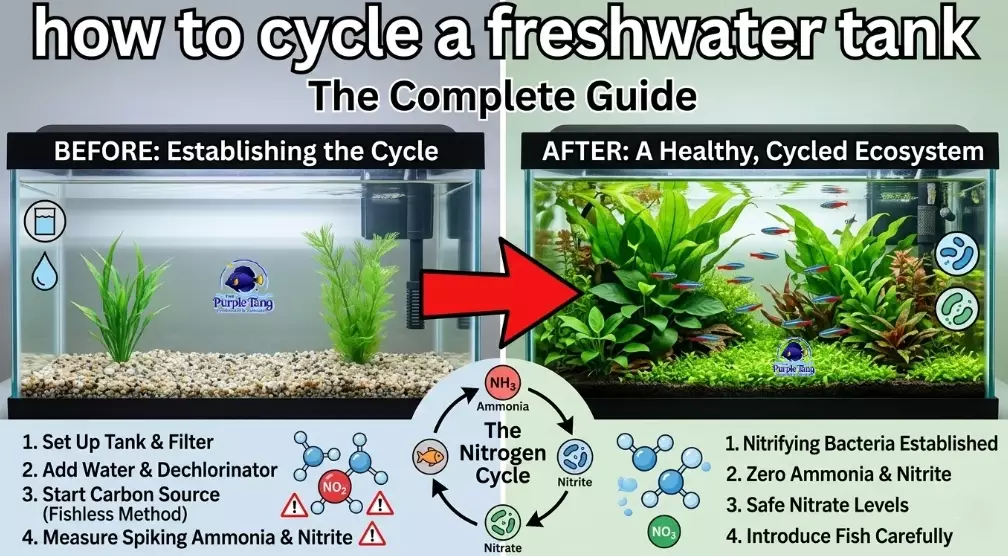
What's in this guide
- What cycling actually means (and why it takes weeks)
- The fishless cycling method I use every time
- Ammonia dosing: how much and how often
- The 4–6 week timeline and the signs you're done
- Five mistakes I see beginners make constantly
- What to do if you already have fish in an uncycled tank
- Real questions from people mid-cycle
What Cycling Actually Means (and Why It Takes Weeks)
The nitrogen cycle is a chain of bacteria doing chemistry for you. Fish waste and leftover food break down into ammonia (NH3). That stuff burns gills and kills fish fast. One group of bacteria, Nitrosomonas, turns ammonia into nitrite (NO2). Nitrite is still deadly because it blocks oxygen transport in the blood. Then a second group, Nitrobacter and friends, converts nitrite into nitrate (NO3). Nitrate is far less toxic and you remove it with water changes or plants.
The catch: those bacteria need time to multiply. You're not adding a liquid that instantly cycles a tank. You're growing a biofilm inside your filter media. That biofilm doubles roughly every 24 hours under good conditions, but building a colony dense enough to handle a full fish load takes weeks, not days. Bottled bacteria products can shave off a few days, but I've never seen one cycle a tank in 24 hours the way the label implies.
The Fishless Cycling Method I Use Every Time
This is the safest route. No fish means no suffering, and you can dose ammonia high enough to grow a robust colony.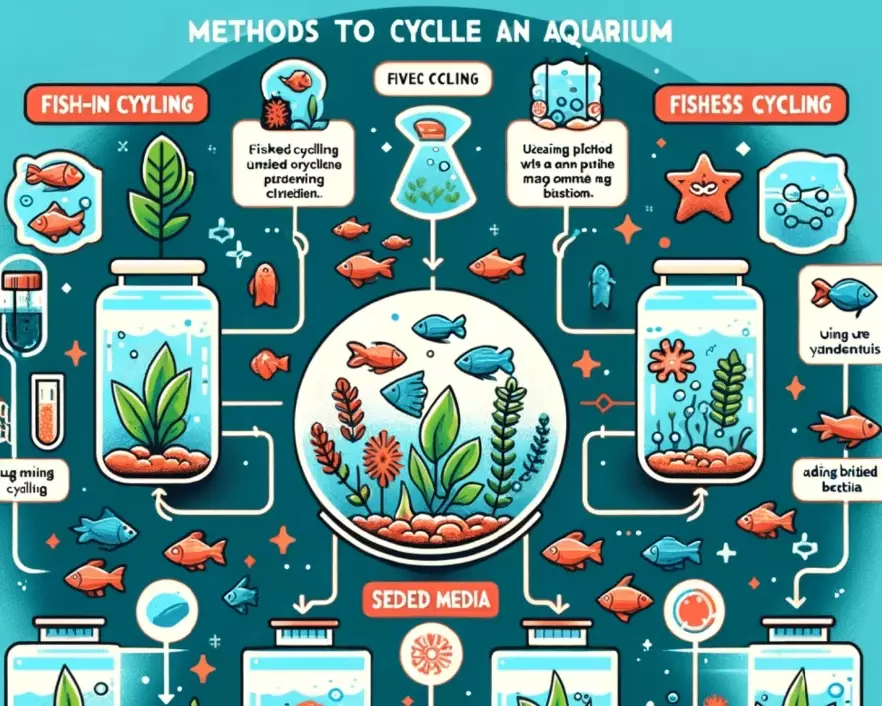
Step 1: Set up everything except fish
Fill the tank, install the filter and heater, add dechlorinator, and get the temperature to around 78–80°F for freshwater tropical setups. Temperature matters more than people think. Below 70°F, the bacteria reproduce slowly and your cycle can stretch past eight weeks.
Turn the filter on and leave it running 24/7. Don't touch the filter media. Don't rinse it under tap water. That biofilm is your future fish's life support.
Step 2: Dose ammonia to 2 ppm
Use pure ammonia with no surfactants or fragrances (check the label, it should only list ammonium hydroxide and water). I use a syringe to dose it precisely. Aim for 2 ppm, which is a decent target for most community tanks. Test after dosing to confirm you hit the mark.
Step 3: Wait, test, and redose
Test ammonia and nitrite every two or three days. Here's what you'll see: ammonia stays high for the first 7–10 days, then starts dropping. Nitrite appears and climbs. At some point nitrite drops and nitrate starts showing up. When ammonia and nitrite both read zero within 24 hours of dosing 2 ppm ammonia, your tank is cycled.
Ammonia Dosing: How Much and How Often
Overdosing ammonia is the most common way to stall a cycle. I've seen people dump half a bottle in because they wanted it to go faster. Above 4 ppm, ammonia actually inhibits the bacteria you're trying to grow. Stick to 2 ppm.
Once ammonia drops below 0.5 ppm, redose back up to 2 ppm. This keeps the bacteria fed without overwhelming them. Do this until the tank can process 2 ppm ammonia to zero ammonia and zero nitrite within 24 hours.
| Week | What you'll likely see | What to do |
|---|---|---|
| Week 1 | Ammonia stays at 2 ppm, no nitrite yet | Do nothing. Test every 3 days. |
| Week 2 | Ammonia starts dropping, nitrite appears | Redose ammonia to 2 ppm when it falls below 0.5. |
| Week 3–4 | Nitrite spikes high, nitrate begins to show | Keep dosing ammonia. Do a partial water change if nitrite goes above 5 ppm. |
| Week 5–6 | Ammonia and nitrite both hit zero within 24 hours | Do one final 2 ppm dose, confirm zero readings the next day, then add fish slowly. |
The 4–6 Week Timeline and the Signs You're Done
Ignore the calendar. The only thing that matters is whether your tank can process 2 ppm ammonia into zero ammonia and zero nitrite in a 24-hour window. That's the finish line. I've had tanks cycle in 18 days with a good bottled bacteria product and warm water. I've had one stubborn 10-gallon take almost nine weeks because I let the temperature drop and underdosed ammonia.
Do a large water change (50–70%) before adding fish to bring nitrate down below 20 ppm. If nitrate is off the charts, your cycle worked, you just need to dilute the end product.
Five Mistakes I See Beginners Make Constantly
- Rinsing filter media under tap water. Chlorine kills the bacteria colony you spent a month growing. Rinse in tank water only, and only when flow is visibly reduced.
- Adding a bottle of "instant cycle" and stocking the same day. Those products can help, but they don't replace testing. I've tested tanks after a bottled bacteria dose and still seen ammonia climb the next day.
- Not dechlorinating before dosing ammonia. Chlorine and chloramine stall the cycle. Treat the water first, always.
- Leaving the filter off to "let things settle." Beneficial bacteria need oxygenated flow. A filter that's off is a dead filter, biologically speaking.
- Testing with strips. Already said it, but it's worth repeating. Liquid kits only for cycling.
What to Do If You Already Have Fish in an Uncycled Tank
This is the panic scenario. Someone buys a tank and fish on the same day. Here's the damage control plan.
Test for ammonia daily. If ammonia or nitrite reads above 0.25 ppm, do a 30–50% water change with temperature-matched, dechlorinated water. Feed sparingly, once every other day, and remove any uneaten food within a few minutes. Add a bottled bacteria product to speed colonization. Keep the filter running and don't clean it.
If you can, borrow a piece of filter media from a healthy established tank and squeeze the gunk into your filter. That's the closest thing to a cheat code I've found. Local fish stores will sometimes give you a bag of dirty filter squeezings if you ask nicely.
Real Questions from People Mid-Cycle
My ammonia has been stuck at 2 ppm for 12 days with no nitrite. Is the cycle dead?
Probably not dead, just slow. Check three things: water temperature (below 72°F slows bacteria a lot), pH (below 6.5 stalls the cycle), and whether you used a dechlorinator that also detoxifies ammonia. Some ammonia-locking products give false zero readings but also starve the bacteria. If all three look fine, dose a small amount of bottled bacteria and wait another week.
Can I cycle a tank with plants and no fish, using just fish food?
You can, but it's messy and imprecise. Fish food breaks down unpredictably, and you can't control the ammonia level. I've done it once and ended up with a nasty bacterial bloom and a cloudy tank. Pure ammonia is cleaner and easier to measure. Plants do help by absorbing nitrate, but they won't build your ammonia-processing colony for you.
Do I need to cycle a tank if I'm using filter media from an established tank?
You can often skip most of the cycle if you transfer enough mature media. I keep a sponge filter running in my main tank specifically so I can seed a new tank instantly. But test for a week anyway. A small colony can crash if you add a heavy fish load right away. Dose 1–2 ppm ammonia and confirm it processes in 24 hours before trusting it.
How do I know the difference between a stalled cycle and a finished one?
A finished cycle shows zero ammonia and zero nitrite within 24 hours of dosing ammonia, with rising nitrate. A stalled cycle usually shows high ammonia and high nitrite together, with no nitrate forming. If nitrite is sky-high and nitrate is zero for more than a week, do a 50% water change and check your pH. Low pH is a common culprit.
I still test my tanks every week, even the ones that have been running for years. Cycling a new aquarium isn't a one-time box you tick. It's the foundation of everything else. Get it right and the rest of the hobby gets a lot easier.
This article was fact-checked against published aquarium nitrogen cycle research and product label data from major water conditioner manufacturers.
Comments