What’s in this routine?
A fish tank cleaning routine sounds simple until you’re staring at green glass two days after a water change. I’ve kept and maintained tanks for over a decade, and the routine below is what I actually do—not the ideal version I read about online. It takes about 30 minutes for a 55-gallon tank. The core idea: clean the filter and gravel in the same session, not on separate weekends.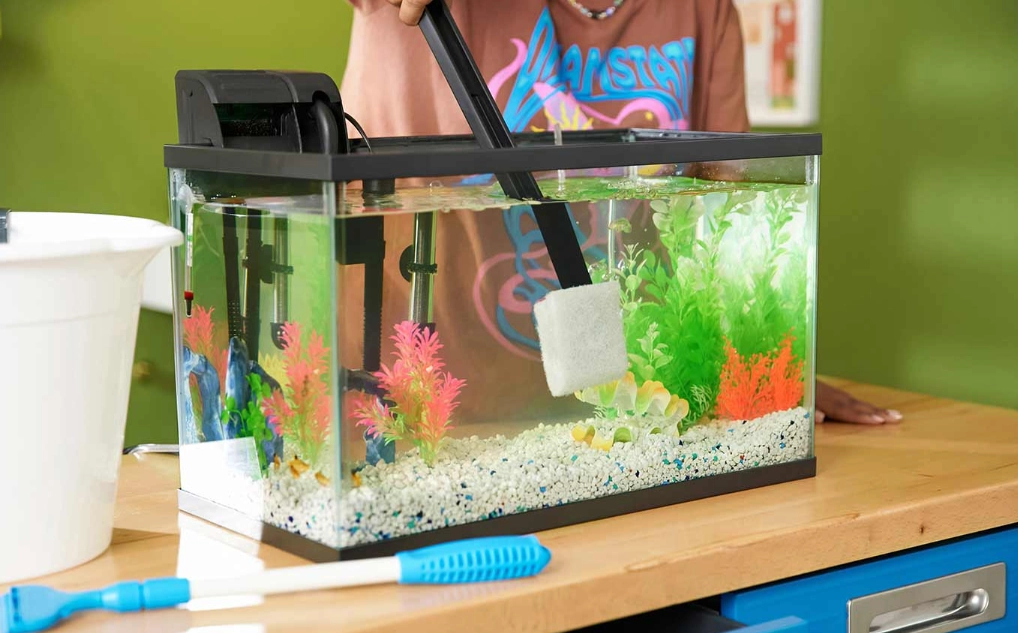
Quick Overview: My Weekly Fish Tank Cleaning Routine
Here’s the short list. I do this every seven days, usually Sunday morning. The tank is a 55-gallon freshwater community setup with sand substrate and a canister filter.
Weekly: 20–25% water change, gravel vacuum, glass wipe, filter intake rinse, algae spot check.
Monthly: Rinse filter media in tank water, check heater and impeller, trim plants, test nitrate and phosphate.
Quarterly: Deep clean filter hoses, replace carbon if used, inspect silicone seals.
That’s it. If you do the weekly part well, the monthly and quarterly tasks stay boring. Boring is good in this hobby.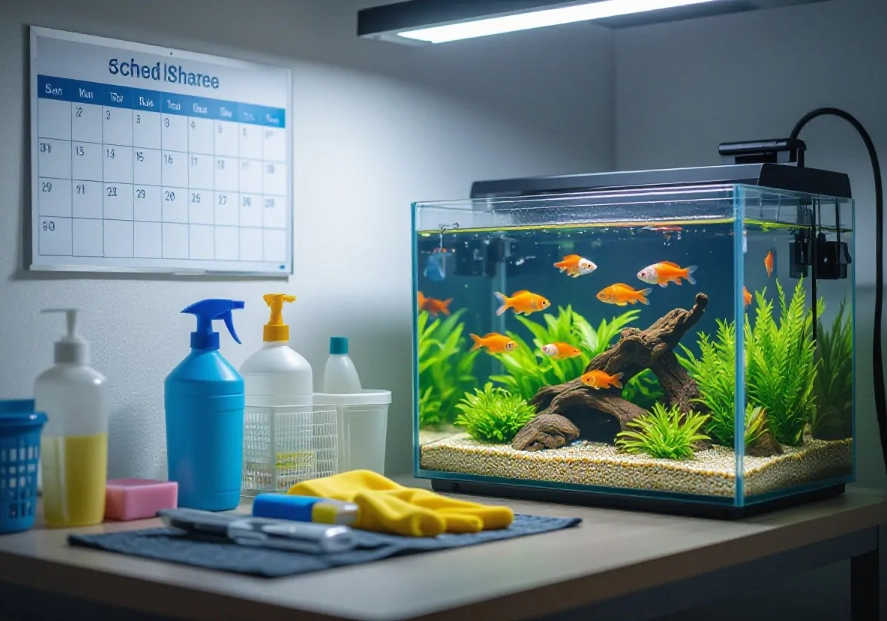
How to Clean a Fish Tank Step by Step
I’ll walk through the exact sequence. Do them in this order to avoid stressing fish or disrupting the bacteria colony.
Step 1: Unplug the Heater and Filter
Always unplug first. I learned this the hard way—once I forgot the heater and it cracked when the water level dropped below the element. A $40 mistake. Unplug the heater and filter before you touch anything.
Step 2: Prep the Water Change Bucket
Fill your bucket with tap water and add a dechlorinator. Let it sit for five minutes. I use a 5-gallon bucket with a marked line so I don’t guess the volume. For a 55-gallon tank, 10 gallons out is plenty. That’s about 18%—slightly less than my 20–25% target, but consistent small changes beat huge swings.
Step 3: Vacuum the Gravel (The Part Most People Rush)
Here’s a non-obvious detail: move the vacuum slowly. If you push it fast, you suck up water without lifting debris. I press the gravel vac into the sand just enough to lift the top layer, then pinch the hose to slow the flow. Work in a grid pattern—top-left to top-right, then down. This method picks up more waste in less water removal.
For a 55-gallon tank, I spend about 8 minutes on gravel alone. If your tank is heavily stocked (like my friend’s mbuna setup), do 30% water changes instead—but still vacuum slowly.
Step 4: Wipe the Glass
Use a dedicated aquarium sponge—not the one from your kitchen sink. I keep a white melamine sponge for stubborn algae spots. Wipe in horizontal strokes. Vertical strokes push algae into the substrate where it can re-grow.
Step 5: Rinse the Filter Intake (Not the Media)
This trips up beginners. You should rinse the intake sponge or pre-filter in the old tank water you just removed. Never rinse the biological media in tap water—chlorine kills the bacteria. I squeeze the intake sponge in the bucket of dirty water, then put it back. That’s a 30-second job that keeps flow strong.
Step 6: Refill and Dechlorinate Again
Pour the new water in gently—over a rock or your hand—so you don’t disturb the substrate. Add dechlorinator to the tank as you refill, not just to the bucket. Some municipalities use chloramine, which bonds to organics. The extra dose is cheap insurance.
Step 7: Plug Everything Back In and Observe
Wait five minutes before plugging the filter back in—this lets the dechlorinator mix. Then check the flow. If it looks weak, you missed rinsing the intake. Watch the fish for ten minutes. Normal behavior: they explore the new water. Stressed behavior: gasping at the surface or hiding. If they gasp, add an air stone.
What Causes Algae Despite Cleaning?
The most common complaint I hear: “I clean every week but algae comes back.” Nine times out of ten, the issue isn’t cleaning frequency. It’s cleaning thoroughly in one area while ignoring another.
Here’s what I see in my own tanks and friends’ tanks:
- Not vacuuming deep enough: Sand traps detritus in the top half-inch. If you only skim the surface, you’re leaving nitrate factories.
- Overfeeding: I weigh fish food on a small scale once a month. Most people feed 2–3 times what the fish need. Uneaten food sinks and breaks down into phosphate—algae fuel.
- Insufficient water changes: 10% a week sounds fine, but if you have plecos or goldfish, bump it to 30%. My rule: test nitrate weekly. If it’s above 20 ppm, increase water volume by 5% each change.
- Filter media clogged: A dirty canister filter still pumps water, but the flow slows through the media. That creates dead zones where waste collects. I rinse my pre-filter sponge every two weeks, not just monthly.
My controversial take: Don’t do a huge 50% water change after a long gap. That resets the water chemistry too fast and stresses fish. Instead, do three 20% changes over a week. I’ve seen more fish die from “clean tank shock” than from slightly high nitrate.
Aquarium Maintenance Schedule: Weekly vs Monthly
Here’s the exact schedule I keep taped inside my cabinet door. Adjust the water volume based on your stocking level.
| Task | Frequency | My 55-Gallon Details | Time |
|---|---|---|---|
| Water change | Weekly | 10 gallons (18%). If nitrate > 20 ppm, 15 gallons. | 10 min |
| Gravel vacuum | Weekly | Slow, grid pattern. 8 minutes on sand. | 8 min |
| Glass wipe | Weekly | Inside and outside. Melamine sponge for spots. | 2 min |
| Filter intake rinse | Weekly | Squeeze in old tank water. Never tap water. | 1 min |
| Filter media rinse | Monthly | Canister media in a bucket of tank water. 3 minutes. | 5 min |
| Algae scrub (decor) | Monthly | Remove rocks with algae, scrub with a toothbrush. | 10 min |
| Deep hose clean | Quarterly | Use a hose brush. Check for kinks. | 20 min |
The schedule matters less than consistency. I missed a week once and my nitrate jumped from 10 to 40 ppm. That took three weeks of extra changes to fix.
Do You Need a Gravel Vacuum for Sand?
Yes—but differently than gravel. Sand packs tight, so waste sits on top. Use a vacuum with a wide nozzle and hover just above the surface. Don’t dig into the sand or you’ll create anaerobic pockets. I use a Python gravel vac with the flow valve half-closed to avoid sucking up sand.
Common Questions from Real Tank Keepers
This routine is the result of trial, error, and a few dead fish. The opinions are my own based on personal tank logs and conversations with local fish store owners. I verified the dechlorinator and filter media guidance against manufacturer instructions and public water quality reports.

Comments