Have you ever seen the European stock market rise by 8% in a single day?
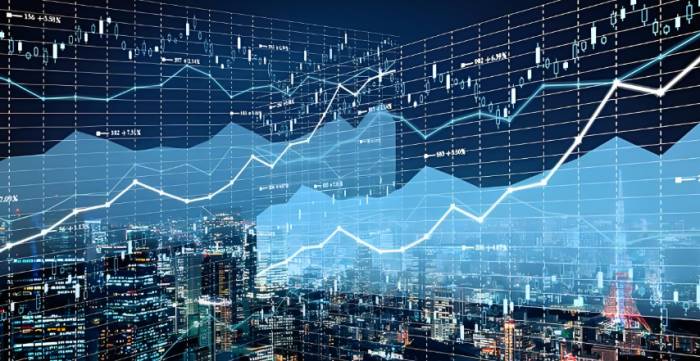
Just last night, after a series of declines, the European stock market made a strong rebound. The German index closed with a nearly 8% increase, and France also rose by 7%. There were several countries in Europe whose stock markets increased by more than 5%.
The U.S. market, which opened subsequently, also followed suit with a significant increase. By the time of closing, the NASDAQ had risen by 3.5%, and the Dow Jones Industrial Average had gained 650 points in one night.
However, gold and oil experienced a significant drop, indicating that funds seeking safety are beginning to flow out, and risks are gradually dissipating.
All these signs seem to suggest that the worst times have passed. Will the market reverse in the coming period?
01
It is still unknown whether this is the market's bottom, but it is indeed the bottom of sentiment for this period.
Just yesterday morning, when A-shares continued to plummet, a friend who was heavily invested in funds announced that he was selling out. The funds he purchased had been declining since last December, but when the decline reached 20%, he said he would delete all the apps and no longer pay attention to the fund trends. He even mocked himself by saying that these funds were initially intended for long-term investment.
However, he did not expect the stock market to continue to decline. The funds he heavily invested in, all of which were thematic investments, fell at a faster rate.
Finally, yesterday, when the entire market was worried about whether it would fall into a long-term bear market, he made the decision to liquidate all his funds.Yesterday morning, there were countless people with similar thoughts. Some suggested that they should sell to avoid the risk of future declines, while others suggested that they should simply lie flat and ignore the situation. Regardless of the stance, most were not optimistic about the future trend, and sentiment had reached its lowest point.
However, before the global stock market rebounded significantly last night, the A-shares had already shown some reaction in advance. By the time of the afternoon close, most of the A-share indices had experienced a deep V-shaped rebound. Although they did not close in the red, the decline had been significantly narrowed.
This friend, in the end, decided to withdraw all his redemption applications for funds before the market closed. He felt that his funds could still be saved.
02
Currently, Asian stock markets have opened and continued the significant rebound from last night. The Nikkei index has risen by 3.3%, the Hang Seng index has risen by 1.3%, and the Hang Seng Technology index, which has recently seen a larger decline, has risen by 3%. After the A-shares opened, all major indices have risen by 1% to 3%.
Is this wave of decline going to stop here?
In fact, during the previous decline, I analyzed the current market situation from multiple perspectives with everyone, including the impact of the 9/11 incident, the 2003 U.S. invasion of Iraq, the 2014 Russia-Ukraine conflict, and even追溯d back to the 1998 NATO bombing of the Federal Republic of Yugoslavia.
In these past events, the global financial market was affected by violent conflicts in a short period of time, with the common characteristic being that the stock market fell rapidly in the short term, gold quickly rose as a safe-haven asset, and funds flowed into the U.S. dollar. This time, the reaction is similar to before.
However, the conflicts of events are relatively short-term, and most events do not need to wait until they are completely settled. As soon as emotions calm down, the financial market gradually returns to its original position, the stock market slowly rises, commodity trading prices fall back, and funds flow out of the U.S. dollar and back into emerging markets.
In the coming days, the market may still experience fluctuations and may test the bottom again, but we should pay more attention to the fundamentals of the economy, including the Federal Reserve's meeting next week.03
In this particular incident, I believe it is even more important to reflect on the emotional changes of investors during the process, to cherish this experience, and to lay a better foundation for future investments.
Everyone knows that to do well in investing, emotional management is more important than investment skills. The greater the odds against human nature, the higher the chances of winning. However, it is precisely against human nature that it is difficult to achieve. Everyone knows that when others are greedy, I should be fearful, and when others are fearful, I should be greedy. But in reality, during a continuous market decline, most people's reactions are that when others are fearful, I become even more fearful.
The friend I mentioned last time, his emotional response represents most people. When the market just started to decline, he could still hold on and was even willing to add more to buy at the bottom. When the market fell further, he ignored it and lay flat. When the market decline broke through his psychological bearing position, he finally lost his mentality and was willing to admit the loss and leave the market.
But the most magical thing is that on the same day, he decided to leave in the morning, but in the afternoon, he withdrew the redemption application. All decisions were based only on emotional responses, without any rules for operation.
If we record our own emotional responses during this period, we can often take them out and review them in future investments. For example, I am like this. During this decline, I will think about the decline after last year's Spring Festival, I will think about the decline when the epidemic broke out in 2020, I will also think about the decline throughout 2018, and even earlier, I experienced the stock market crash in the second half of 2015, and the global subprime crisis in 2008, where global stock indices were halved.
With experience after experience, the impact of emotions becomes smaller and smaller, and the odds of winning in investments become higher and higher.
Related Articles














Leave a Comment